Our Story
Born of Longing, Brewed With Love
The story of how one cup of Adani tea carried a man through his hardest days — and became a corner of ancient Arabia in the heart of Amman.
Amid life's upheavals, the ache of living far from home, and a longing that burned brighter with every step away from it — a small idea was born inside me, like a deep breath after a long suffocation.
True strength lies in a person's ability to turn a journey of pain into creative energy — energy that reorders the mind and opens new paths of awareness and building.
It was not exile alone, nor the harshness of circumstance, that brought Adani Corner to life. It was a deeper pain — one that went beyond what could be endured — when the fires of war broke out in beloved Gaza. Those fires did not burn only there; they burned in the heart, too. They consumed a certain stillness, and awakened an honorable anger and a resolve to return to our roots: to supporting what is local, and to an Arab culture that does not die, no matter how thick the dust settles upon it.
In the midst of all that madness, there were small moments that gave me back my breath — glimmers of hope that kept me going. Simple moments, held in a cup of Adani tea made with love. And that is where our story begins.
They say in Yemen: with the break of every new dawn, the hands of the Adeni woman busy themselves scattering flour lightly across her kitchen table. She rolls out the khameer dough with a wooden pin, her hands knowing by heart exactly where to stop. She shapes the soft dough artfully into neat triangles and squares before sliding them into a pot of hot oil. And while those pastries take on their delicious golden color, the Adani tea has already settled into a tightly sealed dallah, keeping its flavors and aromas from escaping into the air.
And while a family in that coastal city delighted in dipping warm khameer into their cups of Adani tea, that very same cup was a lifeline for a man living in another country — a man who, with every sip, was building Adani Corner in his imagination, detail by detail.
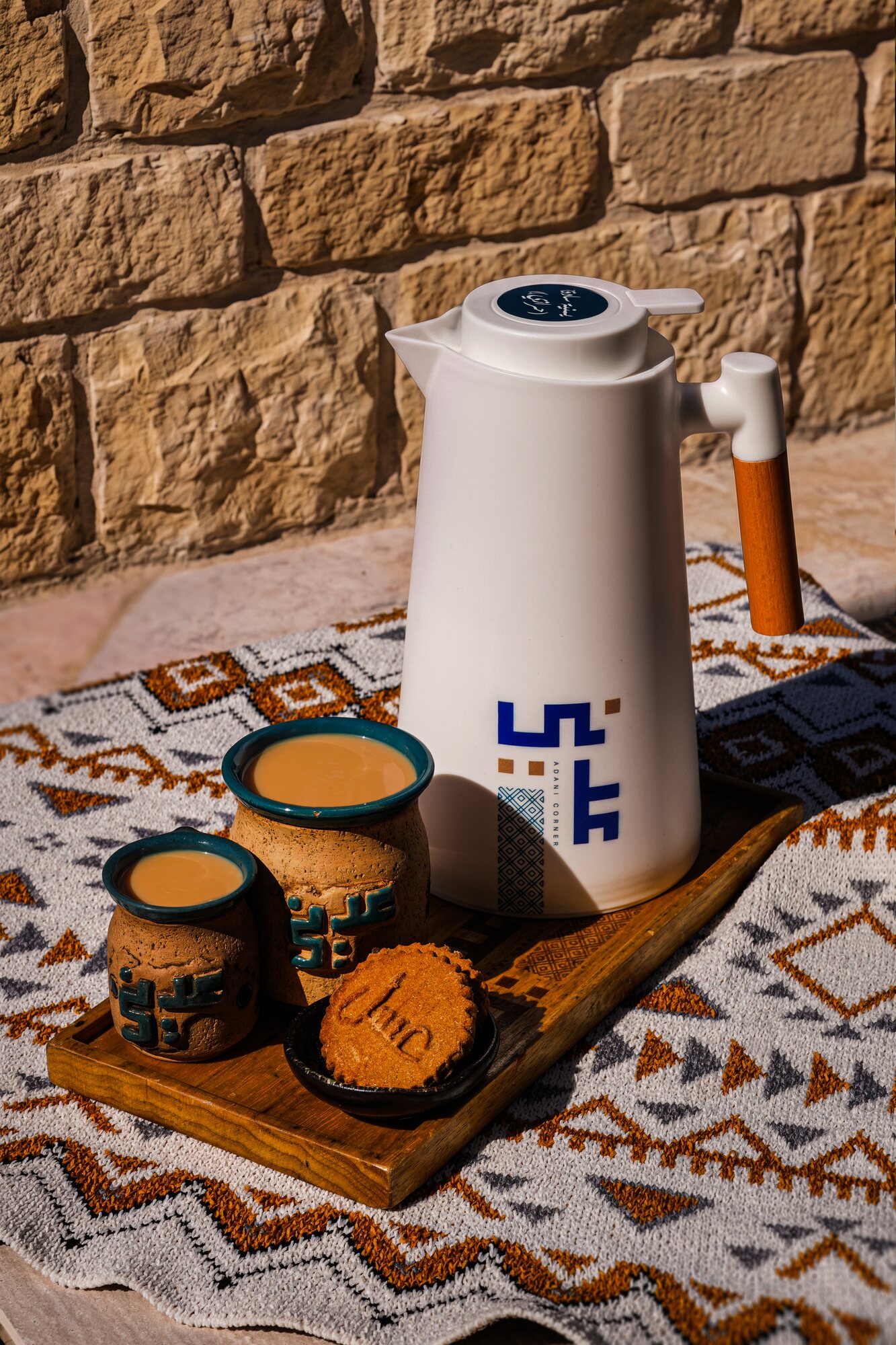
The story did not truly begin with the hot drink itself, but with the warmth and sincere welcome that flowed from the heart of Hajjah Suad — the mother-in-law of my Yemeni colleague at work, who later became a dear friend, the kind you lean on in hard times. She would receive her son and his friends at their home in Riyadh, in an unmistakably Arab atmosphere, always accompanied by a dallah full of authentic Adani tea.
"Hajjah made you a dallah of Adani."
From that time on, Adani tea became bound, for us, to a feeling of love and sharing — a symbol of gallantry and generosity, and surely one of the most beautiful ways to express warm Arab hospitality.
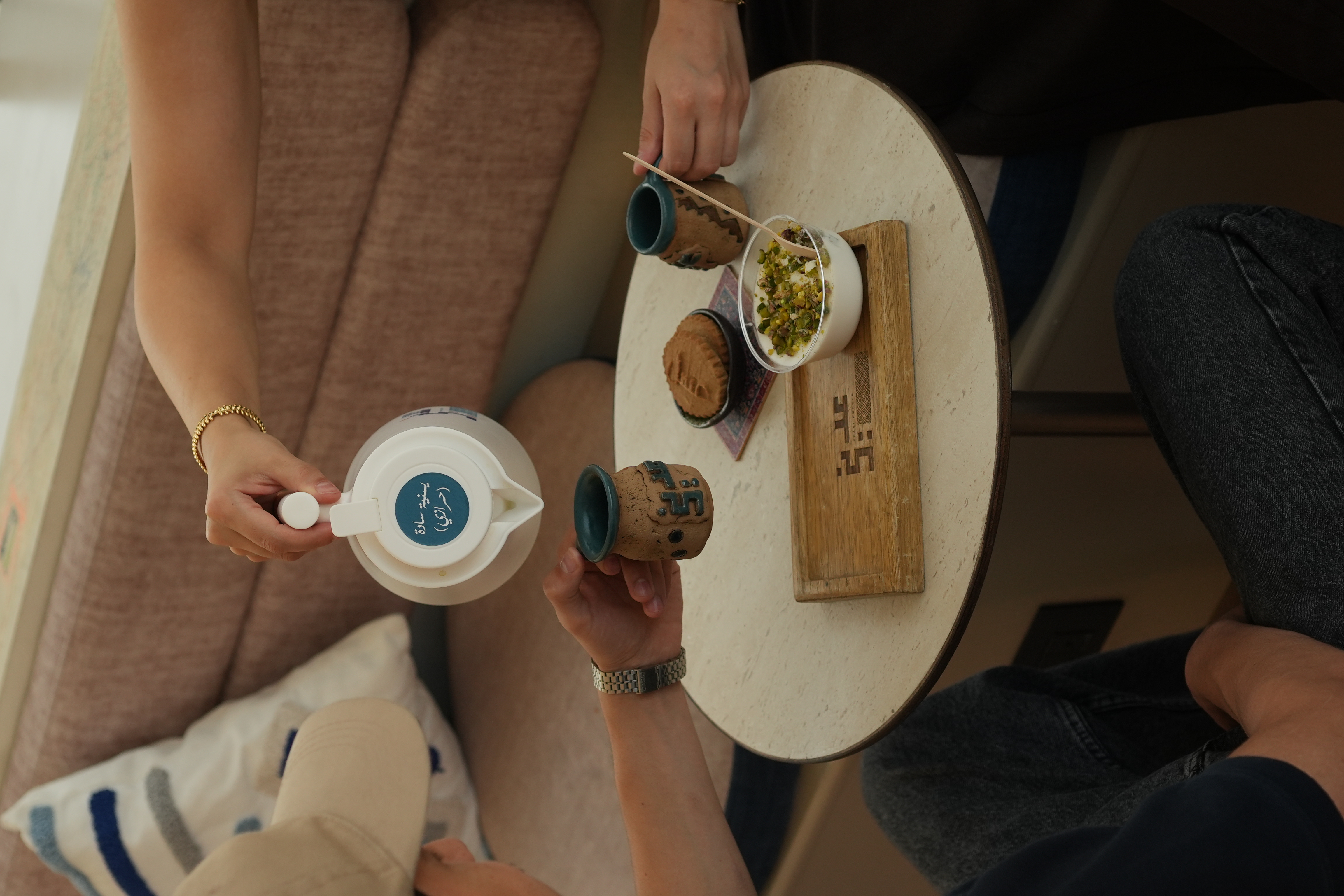
At Adani Corner, our purpose is for you to feel that same warmth and delight — carried to you through the taste of our tea and its blend of authentic spices.
Every Detail Tells a Story
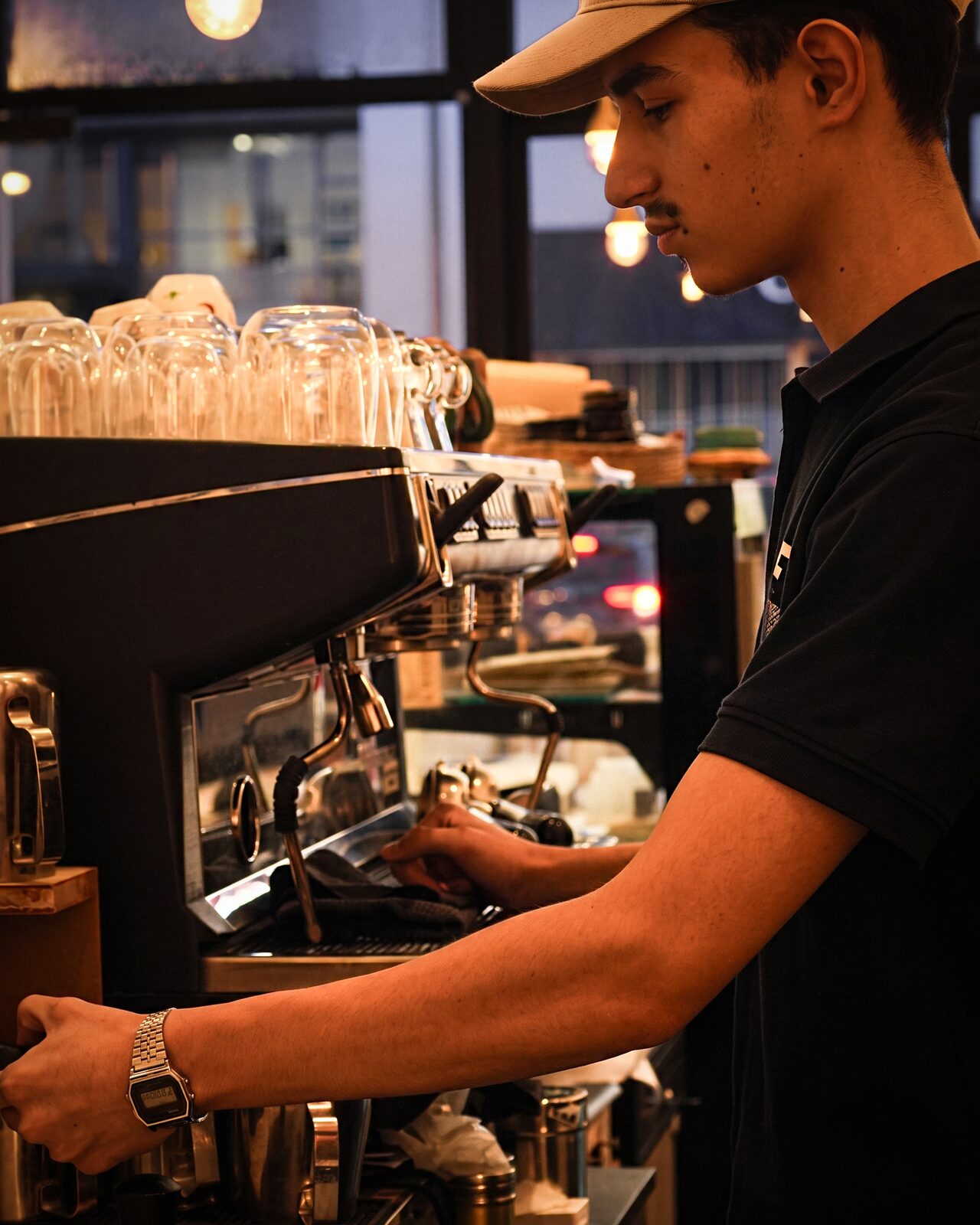
The founders of this place made sure the story of authentic Arab hospitality is told with love — in every detail, large and small.
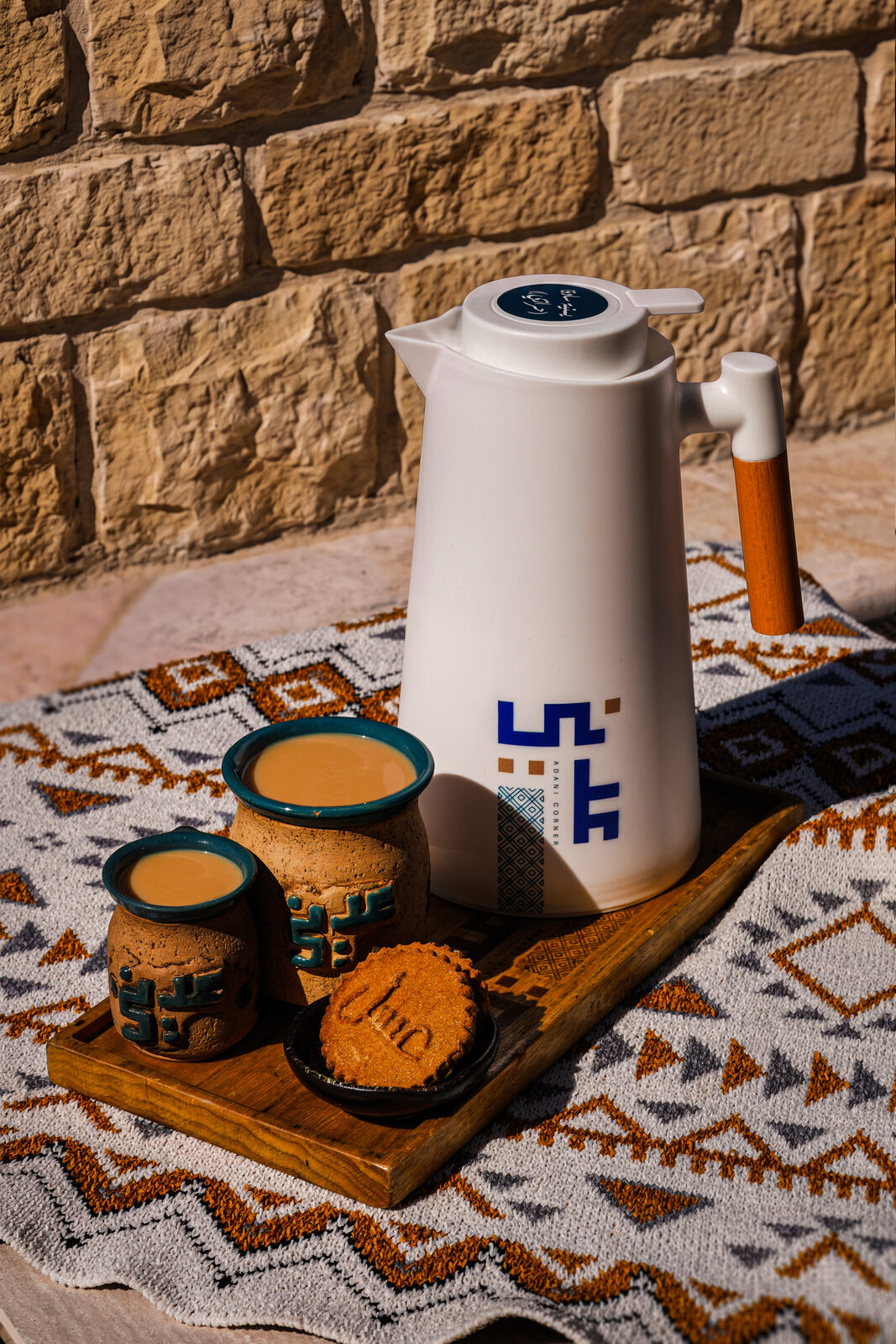
Our Logo
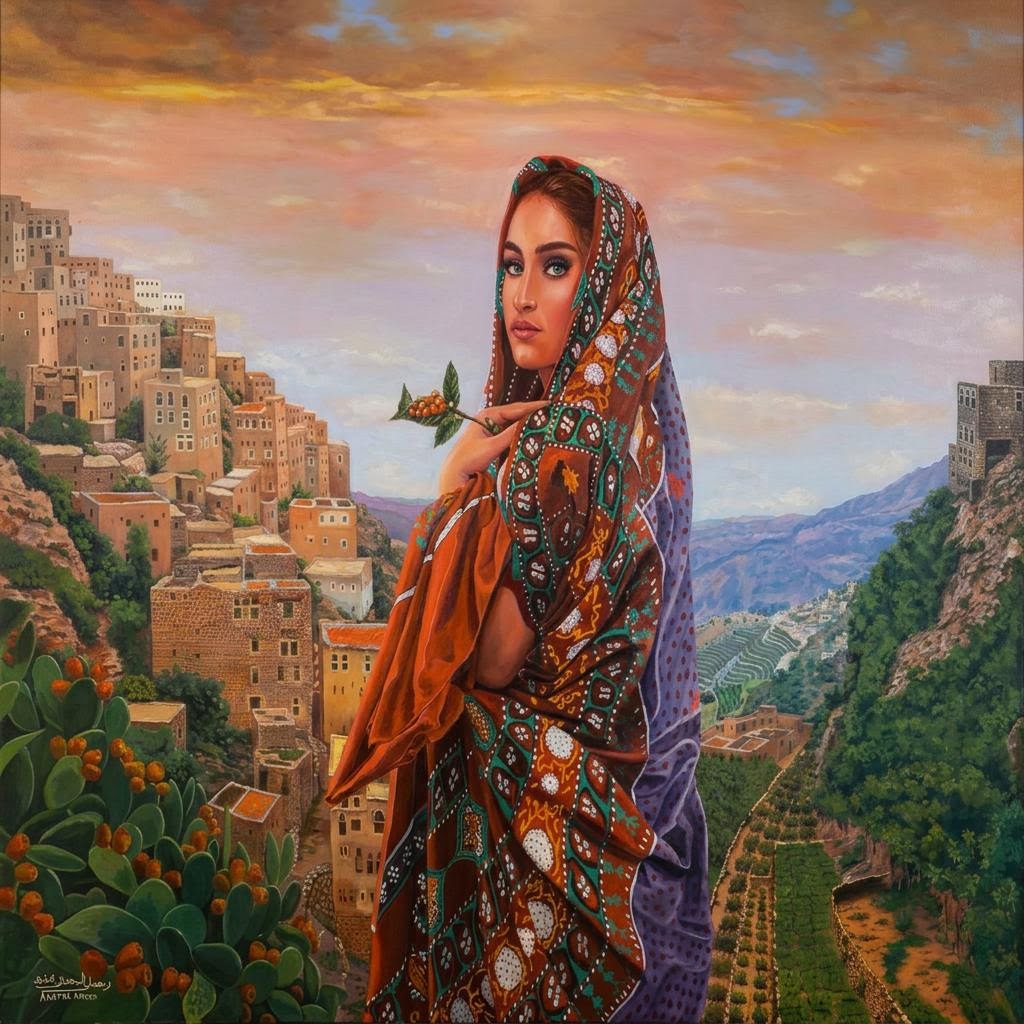
Inspired by Yemen's iconic tower-house architecture, and written in Kufic — the oldest of the Arabic scripts.
Our Drinks
Every coffee and tea we serve is inspired by the East. At Adani Corner, Yemen drew no hard borders around its own drinks — it embraced and welcomed the rich heritage of the whole Arabian Peninsula. From our signature Adani tea to talbina, and Mokha coffee named for Yemen's historic port — each drink was born in a ritual of its own, and we will tell those stories in their own right.
Our Modern Majlis
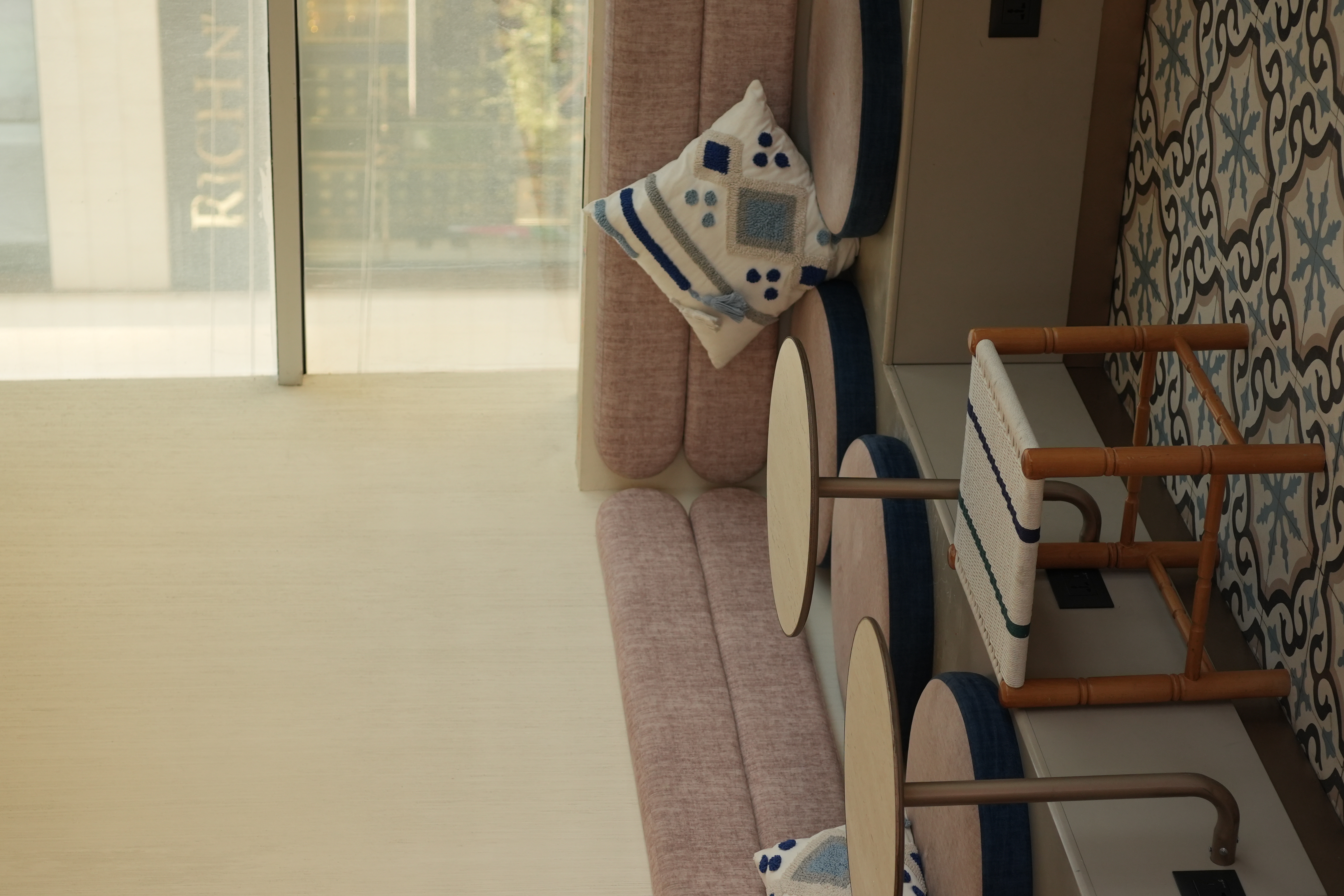
Designed around the idea of “alone, but together,” our modern majlis gives every guest the freedom to choose how they spend their time. Settle into a seat to work quietly while still feeling part of the room, or look up and join the conversation whenever the moment feels right. Its cozy, intimate layout is equally welcoming for groups — everyone can see and hear one another comfortably — while creating natural opportunities to meet new people and make new friends. The handmade cement tiles, custom-made in our color palette by Beit Al Ateeq, pay homage to the floors of old Amman houses and preserve a craft often overlooked in an age of mass-produced ceramic tiles. Every seat also has its own universal power outlet and USB-C charging point, so guests can stay, work, connect, and recharge.

Our Design
Drawn from authentic Arab style: eastern arches grace the walls at the heart of the space, framing artworks painted by passionate Yemeni artists who capture the beauty of Yemeni architecture and the richness of its land and farms. The furniture carries the character of the Arab majlis in warm, earthy tones, with contemporary touches in its materials and soft, flowing curves — and arabesque detailing holds a cherished place throughout.
Made by Hand, With Purpose
Our pottery, serving trays, woven quffa baskets, and even some of our furniture are handmade by the students at BCSE — an organization dedicated to educating children with special needs where specialized schooling is scarce. They are a core partner of ours. Across everything we do, we champion local Jordanian and Arab products — from the ingredients in our drinks and sweets to the cups, plates, macramé, pure cotton bags, and coasters — all crafted by skilled, passionate hands that overcome their own challenges by turning every piece into a work of art.
Our Masterpiece
Bint Al-Bun
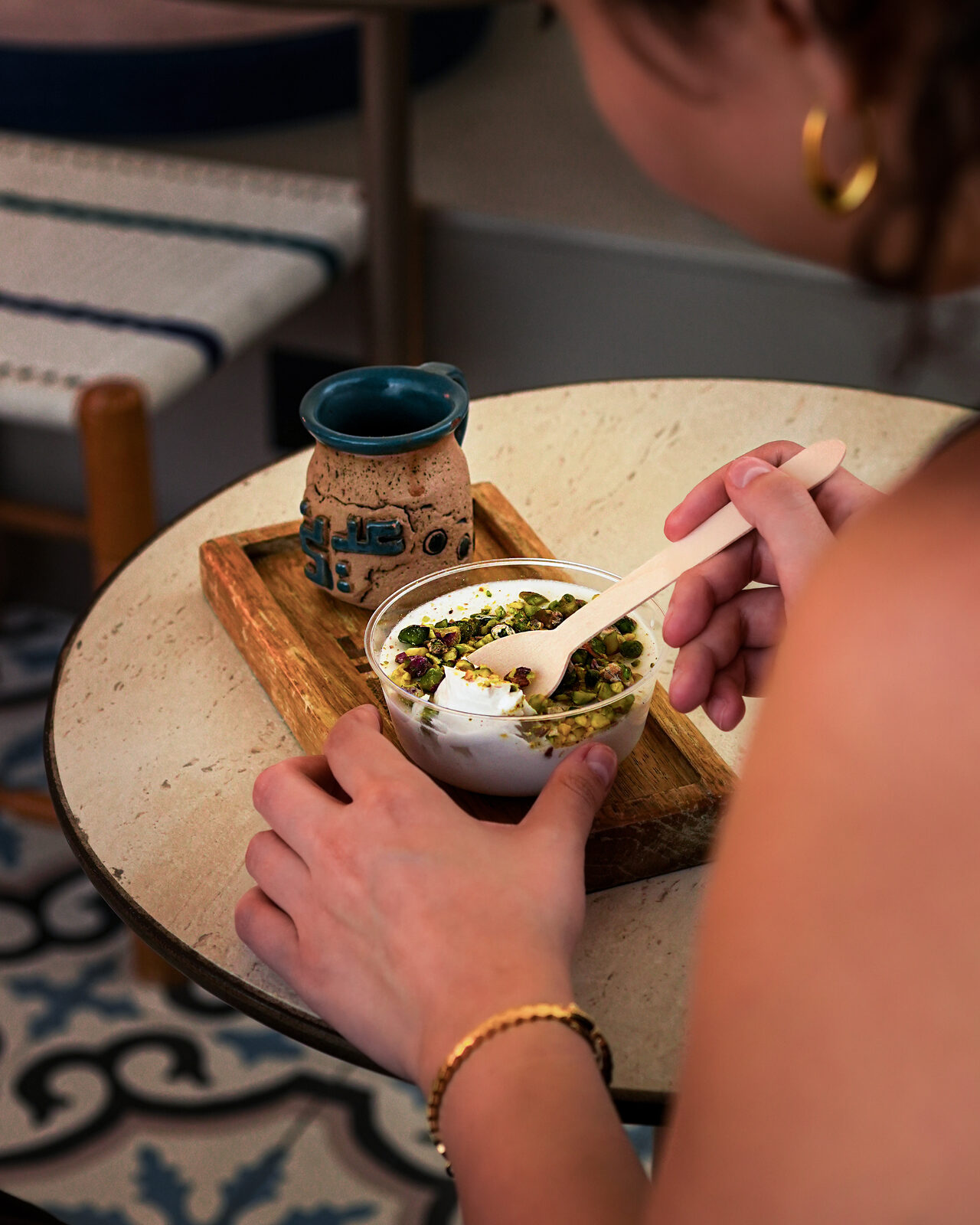
Commissioned by our founders from the prominent Yemeni artist Radfan Al-Mohammadi, Bint Al-Bun was completed in step with the opening of our first branch — and she has watched over the café ever since.
The painting tells of how important, and how advanced, ancient Yemen was for the world — and for coffee culture above all. At its heart stands a figure inspired by Yemen's ancient queen, dressed in a traditional sitara of Sanaa, carrying a branch of coffee fruit: the most treasured harvest of her age.
Around her, the canvas gathers the wonders of that ancient land: the mountains of Haraz, famed for the finest coffee-growing conditions on earth; the terraces of Marib, arguably a wonder of agriculture for their time; and the soaring clay towers that testify to the advanced architecture and building mastery of ancient Yemen.
At Adani Corner, we offer more than a drink or a sweet — we offer an experience that revives the spirit of Arab hospitality, wrapping you in warmth and familiarity from the very first moment.
Every touch in this place reflects our passion and creativity, and every cup of tea and every piece of sweet carries a story of its own — of our love for detail, and of our rich heritage.
Ahlan wa sahlan — welcome.